
Dropshipping
Quick Definition
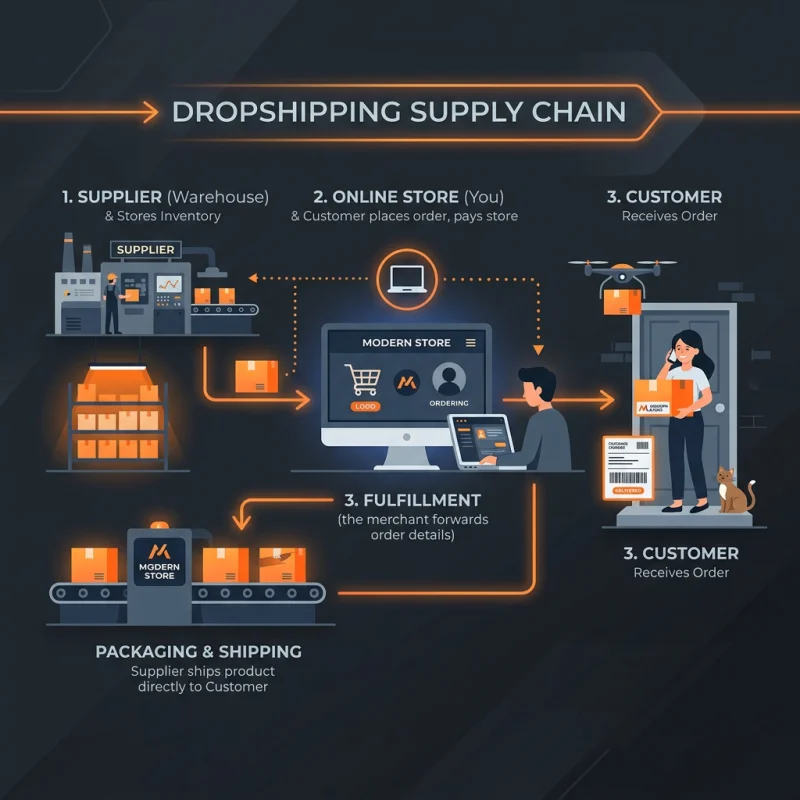
Dropshipping is a retail fulfillment model where a store doesn't keep products in stock - instead, it purchases items from a third-party supplier who ships them directly to the customer.
Table of Contents
- Understanding Dropshipping: A Deep Dive into the Retail Fulfillment Model
- Implementing Dropshipping on Shopify: Step-by-Step Configuration
- 1. Setting Up Your Shopify Store
- 2. Choosing and Integrating Suppliers
- 3. Importing Products and Setting Pricing
- 4. Configuring Shipping Settings
- 5. Automating Order Fulfillment
- Strategic Business Value and Optimization Tips for Dropshipping
- Frequently Asked Questions about Dropshipping
- How do I find reliable dropshipping suppliers?
- What are the main challenges of dropshipping?
- Can dropshipping be scaled into a large business?
Understanding Dropshipping: A Deep Dive into the Retail Fulfillment Model
Dropshipping is a retail fulfillment method that has revolutionized the way entrepreneurs and businesses operate in the e-commerce landscape. Unlike traditional retail models where a seller stocks inventory and manages shipping logistics, dropshipping allows a store to sell products without holding any physical stock. Instead, when a customer places an order, the retailer forwards the order details to a third-party supplier - often a manufacturer or wholesaler - who then ships the products directly to the customer. This model significantly reduces upfront capital investment, minimizes inventory risks, and offers unparalleled flexibility in product offerings.
At its core, dropshipping leverages the power of supply chain management and digital connectivity. The retailer acts as a middleman, focusing on marketing, customer service, and sales, while the supplier handles warehousing and fulfillment. This separation of responsibilities enables entrepreneurs to test new products rapidly, scale their operations with minimal overhead, and operate from virtually anywhere with an internet connection.
According to industry data, dropshipping accounts for approximately 23% of all online retail sales, reflecting its growing popularity among small and medium-sized enterprises. However, success in dropshipping requires a nuanced understanding of supplier relationships, product selection, and customer experience management. It also involves navigating challenges such as supplier reliability, shipping times, and competitive pricing. As the e-commerce ecosystem evolves, dropshipping remains a compelling model for those seeking low-risk entry into online retail, provided they implement effective strategies and leverage the right tools.
Implementing Dropshipping on Shopify: Step-by-Step Configuration
1. Setting Up Your Shopify Store
Begin by creating a Shopify account and selecting a theme that aligns with your brand identity. Customize your storefront to ensure a professional appearance, focusing on user experience and mobile responsiveness. Shopify offers a variety of free and paid themes that are optimized for conversions. Once your store is set up, add essential pages such as About Us, Contact, and Privacy Policy to build trust with visitors.
2. Choosing and Integrating Suppliers
Identify reliable dropshipping suppliers through platforms like Oberlo, Spocket, or Modalyst, which seamlessly integrate with Shopify. These apps allow you to import products directly into your store, automate order fulfillment, and sync inventory levels. When selecting suppliers, consider factors such as product quality, shipping times, and customer reviews. Establish clear communication channels and set expectations regarding order processing and delivery.
3. Importing Products and Setting Pricing
Use the supplier apps to browse and import products into your store. Customize product descriptions, images, and pricing to match your branding and target market. Implement a pricing strategy that accounts for product costs, shipping fees, and desired profit margins. Shopify's built-in analytics can help you monitor sales performance and optimize pricing over time.
4. Configuring Shipping Settings
Navigate to Settings > Shipping and delivery in your Shopify admin panel. Define shipping zones based on your target markets and set shipping rates accordingly. Many dropshippers opt for flat-rate or free shipping models to attract customers, but ensure your margins remain sustainable. Consider integrating real-time carrier rates for transparency and accuracy. Additionally, set clear expectations for shipping times, especially if working with suppliers in different regions.
5. Automating Order Fulfillment
Leverage Shopify apps like Oberlo or Dropified to automate order processing. When a customer places an order, the app automatically forwards the details to your supplier, who then ships the product directly. Regularly monitor order statuses and maintain communication with suppliers to handle any issues promptly. Automating these processes reduces manual effort and minimizes errors, leading to a smoother customer experience.
Strategic Business Value and Optimization Tips for Dropshipping
While dropshipping offers low barriers to entry, building a successful and scalable business requires strategic planning and continuous optimization. Here are key insights and tips:
- Niche Selection: Focus on a specific niche with passionate audiences and less competition. Use tools like Google Trends and Keyword Planner to identify trending products and underserved markets.
- Product Validation: Before adding new items, validate demand through social media engagement, influencer marketing, and sales data. Avoid saturated markets to maximize profitability.
- Supplier Relationships: Establish strong relationships with reliable suppliers. Request samples, negotiate terms, and maintain open communication to ensure quality and timely delivery.
- Customer Service: Provide exceptional support to differentiate your store. Use chatbots, FAQ pages, and prompt responses to build trust and encourage repeat business.
- Marketing and SEO: Invest in targeted advertising, content marketing, and SEO optimization. Use relevant keywords, optimize product descriptions, and build backlinks to improve organic traffic.
- Data-Driven Decisions: Regularly analyze sales metrics, customer feedback, and website analytics. Use insights to refine product offerings, marketing strategies, and operational processes.
Real-world examples, such as Gymshark and MVMT, showcase how dropshipping can evolve into a multi-million dollar enterprise with the right branding, marketing, and operational excellence. For further reading on scaling dropshipping businesses, visit Shopify's official guide and Google's structured data documentation.
Frequently Asked Questions about Dropshipping
How do I find reliable dropshipping suppliers?
Finding reliable suppliers is crucial for a successful dropshipping business. Start by exploring platforms like Oberlo, Spocket, and Modalyst, which vet suppliers and provide reviews. Look for suppliers with high ratings, positive customer feedback, and clear shipping policies. Request samples to assess product quality firsthand and communicate directly to establish trust. Additionally, consider supplier location, shipping times, and return policies. Building strong relationships and continuously monitoring supplier performance will help ensure consistent product quality and timely fulfillment, reducing customer complaints and returns.
What are the main challenges of dropshipping?
Common challenges include long shipping times, supplier unreliability, intense competition, and thin profit margins. Shipping delays can lead to customer dissatisfaction, especially when working with international suppliers. Supplier unreliability may result in stockouts or poor product quality. The competitive landscape often requires aggressive marketing and branding efforts to stand out. Additionally, managing profit margins is critical, as costs can escalate with advertising and shipping fees. Successful dropshippers mitigate these challenges through careful supplier selection, transparent communication, and continuous optimization of their marketing and operational strategies.
Can dropshipping be scaled into a large business?
Yes, dropshipping can be scaled into a large enterprise with proper systems and processes. Scaling involves expanding product lines, optimizing marketing campaigns, automating order fulfillment, and building a strong brand presence. Many successful brands started as small dropshipping stores and grew through strategic niche selection, customer engagement, and operational efficiency. However, scaling also requires investing in customer service, logistics, and technology infrastructure. As order volume increases, consider integrating with third-party logistics (3PL) providers or transitioning to hybrid models that combine dropshipping with warehousing for faster delivery and better control over quality.

About Amira Hassan
Digital growth consultant specializing in AI-powered commerce strategies. Amira bridges the gap between cutting-edge AI tools and practical Shopify store growth.