
Fulfillment
Quick Definition
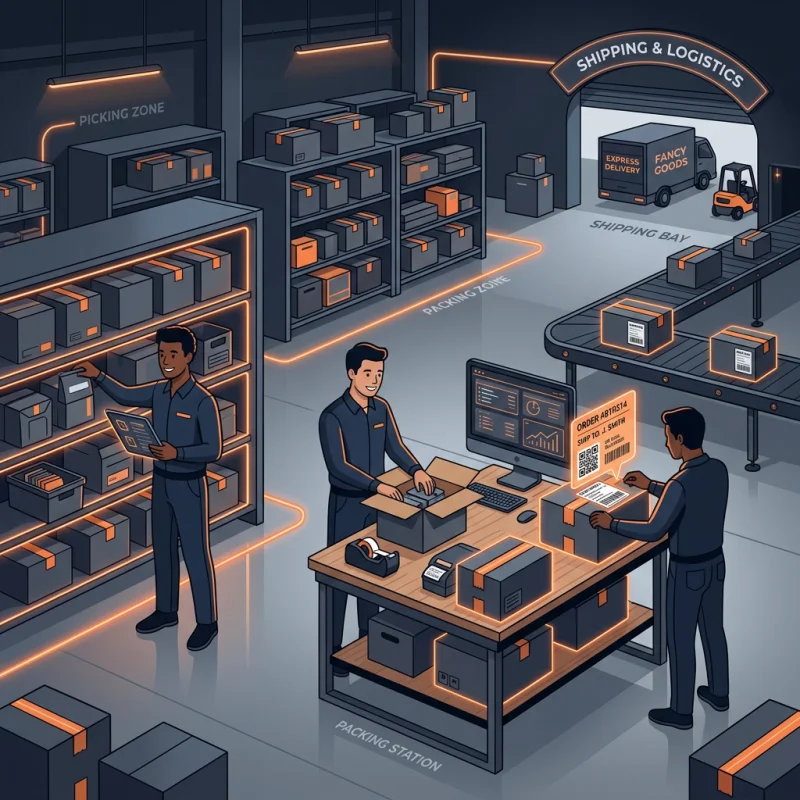
Fulfillment is the entire backend process of receiving, packing, and shipping an order to a customer after they purchase it on your Shopify store.
Table of Contents
- Understanding Fulfillment in E-Commerce
- Configuring Fulfillment in Shopify
- The Strategic Value of Fulfillment for E-Commerce Businesses
- Optimization Tips and Future Trends
- Conclusion
- Frequently Asked Questions
- How do I set up fulfillment in Shopify?
- What are the main types of fulfillment methods?
- How can I optimize my fulfillment process for faster delivery?
Understanding Fulfillment in E-Commerce
Fulfillment in e-commerce refers to the entire backend process involved in receiving, processing, packing, and shipping customer orders. It is a critical component of the supply chain that directly impacts customer satisfaction, operational efficiency, and profitability. Fulfillment encompasses various activities, including inventory management, order processing, packaging, shipping logistics, and delivery tracking. As online shopping continues to grow - projected to reach over 6.5 trillion dollars globally by 2023 - effective fulfillment strategies become increasingly vital for e-commerce businesses to maintain competitive advantage and ensure timely delivery.
At its core, fulfillment is about transforming a customer's online purchase into a tangible product delivered to their doorstep. This process involves coordination among multiple stakeholders, including suppliers, warehouses, couriers, and customer service teams. Modern fulfillment solutions leverage technology such as warehouse management systems (WMS), automation, and real-time tracking to streamline operations and reduce errors. The importance of fulfillment extends beyond logistics; it influences customer reviews, repeat business, and brand reputation. Efficient fulfillment can reduce shipping costs, improve delivery times, and enhance overall customer experience, making it a strategic focus for e-commerce entrepreneurs and large retailers alike.
Configuring Fulfillment in Shopify
Shopify provides a robust platform to manage fulfillment seamlessly. Setting up fulfillment involves configuring shipping settings, integrating with fulfillment providers, and customizing order processing workflows. To begin, navigate to Settings > Shipping and delivery in your Shopify admin panel. Here, you can define shipping zones, rates, and methods tailored to your target markets. Shopify allows you to set up multiple shipping profiles, enabling different fulfillment strategies for various product categories or regions.
Next, consider integrating with third-party fulfillment services such as ShipBob, Fulfillment by Amazon (FBA), or other logistics providers. Shopify's app store offers numerous integrations that automate order forwarding, inventory updates, and tracking notifications. To connect these services, go to Apps > Shopify App Store and search for your preferred fulfillment partner. Follow the installation instructions and authorize the connection to sync orders automatically.
Within your Shopify admin, you can also customize the fulfillment process by setting up order fulfillment statuses, notifications, and packing slips. For example, under Orders, you can manually mark an order as fulfilled or automate this step via apps. Additionally, Shopify's built-in features allow you to generate packing slips and shipping labels directly from the dashboard, streamlining the packing process.
For merchants using dropshipping, the process involves syncing product data with suppliers and automating order placement. Shopify's integration with dropshipping apps like Oberlo or Spocket simplifies this workflow, enabling automatic order fulfillment once a customer completes a purchase. Proper configuration of these tools ensures a smooth, scalable fulfillment process that minimizes delays and errors.
The Strategic Value of Fulfillment for E-Commerce Businesses
Fulfillment is not merely a logistical necessity; it is a strategic lever that can significantly influence a brand's success. Effective fulfillment enhances customer satisfaction by ensuring timely delivery, accurate order processing, and transparent communication. This, in turn, fosters trust and encourages repeat business. According to a report by Shopify, 70% of consumers say fast shipping influences their purchase decisions, highlighting the importance of an optimized fulfillment process.
Optimizing fulfillment can also reduce operational costs through inventory management efficiencies, automation, and route optimization. For instance, utilizing regional warehouses or dropshipping can decrease shipping times and costs, providing a competitive edge. Additionally, integrating fulfillment data with analytics tools allows businesses to forecast demand, manage stock levels, and plan inventory replenishment proactively.
Real-world examples demonstrate the impact of strategic fulfillment. Brands like Warby Parker and Casper have built their reputation on fast, reliable delivery and hassle-free returns. These companies leverage advanced fulfillment centers and sophisticated logistics networks to deliver a seamless customer experience. Moreover, adopting sustainable fulfillment practices - such as eco-friendly packaging and carbon-neutral shipping - can appeal to environmentally conscious consumers and enhance brand loyalty.
Optimization Tips and Future Trends
To maximize the benefits of fulfillment, consider the following strategies:
- Leverage automation: Use warehouse management systems and robotics to speed up packing and reduce errors.
- Implement multi-channel fulfillment: Sync inventory and orders across platforms like Shopify, Amazon, and eBay to avoid overselling.
- Optimize shipping options: Offer multiple shipping methods, including expedited and free shipping thresholds, to cater to customer preferences.
- Utilize data analytics: Analyze order patterns and delivery performance to identify bottlenecks and improve logistics.
- Focus on sustainability: Adopt eco-friendly packaging and partner with green couriers to appeal to eco-conscious consumers.
Looking ahead, emerging technologies such as artificial intelligence, drone delivery, and autonomous vehicles promise to revolutionize fulfillment. AI-driven route optimization can reduce delivery times and costs, while drones and autonomous vehicles may enable faster, contactless deliveries in urban areas. Additionally, the rise of on-demand warehousing and micro-fulfillment centers will allow businesses to serve local markets more efficiently.
Conclusion
Fulfillment is a cornerstone of successful e-commerce operations. It encompasses a complex web of processes that, when optimized, can lead to higher customer satisfaction, lower costs, and competitive advantage. Shopify's flexible platform and integrations make it easier for merchants to implement effective fulfillment strategies tailored to their business needs. Staying abreast of technological innovations and adopting sustainable practices will position your brand for long-term growth and customer loyalty.
Frequently Asked Questions
How do I set up fulfillment in Shopify?
Setting up fulfillment in Shopify involves configuring your shipping settings, integrating with fulfillment providers, and automating order processing. Start by navigating to Settings > Shipping and delivery to define your shipping zones, rates, and methods. Then, explore Shopify's app store to connect with third-party fulfillment services like ShipBob or FBA. These integrations enable automatic order forwarding, inventory updates, and tracking. You can also customize fulfillment statuses and generate packing slips within Shopify. Proper setup ensures a smooth order flow from purchase to delivery, enhancing customer satisfaction and operational efficiency.
What are the main types of fulfillment methods?
There are several primary fulfillment methods used in e-commerce, including in-house fulfillment, dropshipping, third-party logistics (3PL), and hybrid models. In-house fulfillment involves storing inventory and shipping products directly from your own warehouse. Dropshipping allows you to sell products without holding inventory; suppliers handle storage and shipping. 3PL providers manage warehousing, packing, and shipping on your behalf, offering scalability and expertise. Hybrid models combine elements of these approaches, such as using in-house storage for best-selling items and dropshipping for others. Choosing the right method depends on your business size, product type, and growth plans.
How can I optimize my fulfillment process for faster delivery?
Optimizing your fulfillment process for speed involves multiple strategies. Implement automation tools like warehouse management systems to streamline packing and inventory management. Use data analytics to forecast demand and adjust stock levels proactively. Consider regional warehousing or micro-fulfillment centers to reduce shipping distances. Offer multiple shipping options, including expedited services, and communicate estimated delivery times clearly to customers. Partner with reliable couriers and leverage route optimization software to ensure timely deliveries. Regularly review your logistics performance metrics and seek customer feedback to identify areas for improvement. These steps collectively enhance delivery speed and customer satisfaction.

About Amira Hassan
Digital growth consultant specializing in AI-powered commerce strategies. Amira bridges the gap between cutting-edge AI tools and practical Shopify store growth.