10 Best AI SEO Optimization Tools for 2026

Most merchants ask the wrong question. They ask, “Which AI tool writes the fastest blog post?” The better question is, “Which tool helps me rank, get indexed, fix store issues, and show up where buyers now discover products?”
That gap matters. AI SEO optimization tools have moved well beyond novelty. Semrush reports that almost 70% of businesses say they see a higher ROI from using AI in SEO, and the same roundup notes that 78% of organizations use AI in their marketing operations, pointing to a market that now treats AI as workflow infrastructure rather than a side experiment (Semrush AI SEO statistics). For Shopify merchants, that changes the buying criteria. You don't need another toy for drafting paragraphs. You need a system that helps you publish faster, fix technical SEO faster, and measure visibility across both classic search and AI-driven discovery.
That's also why so many “best tools” lists miss the point. They focus on writing features, then ignore implementation, indexing, schema, redirects, and AI search visibility. If you run an eCommerce store, those omissions cost sales. The strongest opportunity today is tying content, technical SEO, and discoverability into one operating system, especially if you're optimizing for AI search and shopping assistants.
Table of Contents
- 1. wRanks
- 2. Surfer SEO
- 3. Clearscope
- 4. MarketMuse
- 5. Frase
- 6. Semrush Content Toolkit
- 7. Scalenut
- 8. Outranking
- 9. NEURONwriter
- 10. Alli AI
- Top 10 AI SEO Optimization Tools: Feature Comparison
- Final Thoughts
1. wRanks
Run a Shopify store and tired of stitching together four tools just to fix titles, schema, redirects, and indexing? Start with wRanks.
It fits how Shopify merchants work. You need to improve product pages, collection pages, technical SEO, and AI visibility fast, without waiting on a developer for every small change. A tool that adds SEO tasks but creates implementation friction is a bad purchase.

Why wRanks is the best fit for Shopify
wRanks stands out because it covers the jobs merchants usually split across multiple apps. You get technical audits, issue scoring, AI writing for on-page content, image alt text generation, schema injection, indexing tools, keyword tracking, AI visibility monitoring, and redirect management inside one Shopify-focused workflow.
That matters because eCommerce SEO breaks down at execution, not ideas. A lot of AI SEO tools can draft a paragraph. Fewer can help you clean up storewide issues, publish fixes inside Shopify, and track whether your brand shows up across AI assistants as well as search. Analysts at Whatagraph note that AI SEO tools are expanding into visibility tracking and AI-focused reporting because marketers want proof of presence across ChatGPT, Gemini, Perplexity, and Google AI experiences, not just published content (Whatagraph on AI SEO measurement and visibility tracking).
Practical rule: If a tool writes copy but cannot help you implement technical fixes or monitor AI visibility, it is not enough for a serious Shopify store.
wRanks also handles the page-level work merchants care about. It can generate meta titles, descriptions, product copy, collection text, and blog content with SEO metadata, FAQs, and images. It adds Product and FAQ JSON-LD, supports multilingual SEO for Shopify Markets, and gives you control over robots.txt and llms.txt.
One more point. Shopify merchants should care less about flashy AI writing demos and more about whether the app helps pages get crawled, understood, and updated without slowing the storefront. That is where wRanks earns its place on this list.
Where it wins and where to stay realistic
wRanks is for merchants and agencies that want to fix problems, not just identify them. It connects recommendations to action inside Shopify, which is exactly where many eCommerce teams get stuck. Reviews of AI SEO tools for commerce sites increasingly focus on workflow speed, schema, redirects, audits, and multi-page optimization because implementation is what turns SEO plans into revenue (20North Marketing on AI SEO workflow and implementation for commerce sites).
My recommendation is simple:
- Best for Shopify merchants: Choose wRanks if you want one app to handle technical SEO, on-page optimization, and AI visibility without piling on extra subscriptions.
- Best for agencies with Shopify clients: It is a practical choice when you need audits, execution, and reporting in one place.
- Less ideal for non-Shopify teams: The main advantage is the native Shopify workflow. If you are not on Shopify, that advantage disappears.
Here is the honest tradeoff:
- Best strengths: Shopify-native setup, technical SEO plus content tools plus AI visibility tracking, no-theme-change deployment, built-in indexing and redirect controls.
- Main caution: AI-generated copy still needs human review for brand voice, product accuracy, and compliance.
If Shopify is your platform, wRanks is the strongest fit in this roundup.
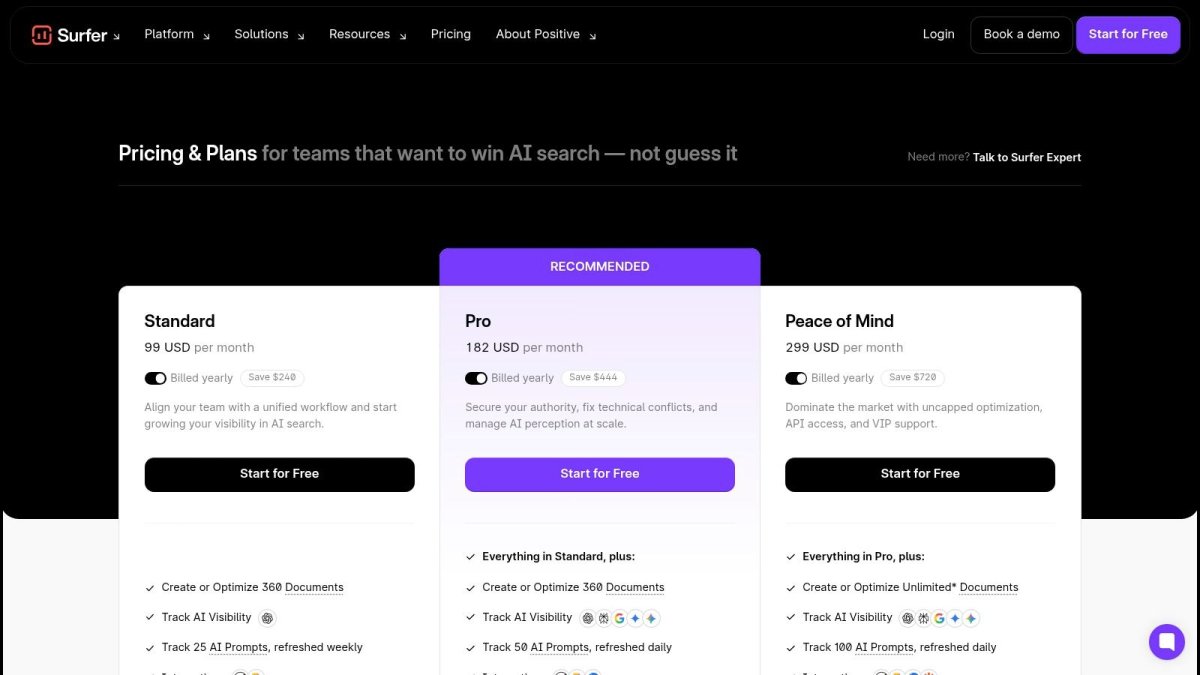
2. Surfer SEO
Need better rankings from the content you already plan to publish? Surfer SEO is a strong pick when the problem is on-page execution, not store setup.
It works best for teams with a real content calendar, clear target pages, and writers who need guardrails. Surfer gives them page-level direction based on live SERP patterns, then keeps everyone working from the same scoring system.
Best use case
Surfer's value comes from execution discipline. The Content Editor helps writers cover the right subtopics, use relevant terms naturally, and structure pages in a way that matches what is already ranking. The Audit tool is just as useful. It gives teams a practical way to revisit older pages and tighten them before traffic slips further.
For eCommerce brands, that matters most on collection pages, buying guides, comparison pages, and top-of-funnel blog content that supports product discovery. If you are using AI to speed up drafting, pair Surfer with a tighter workflow for merchant-specific content quality. This guide on using an AI article generator for Shopify stores covers that side well.
Here's my take. Surfer is a content optimization tool for marketing teams that already know what they want to rank. It is less useful for merchants expecting it to fix technical SEO, product schema, redirects, indexing, or Shopify theme limitations.
Surfer is a smart buy if you want:
- Clear writer guidance: Content scores reduce guesswork and make briefs easier to execute.
- Better refresh workflows: Audits help you update aging pages instead of rewriting from scratch.
- Stronger editorial consistency: Teams can hold freelancers and in-house writers to the same on-page standard.
The tradeoff is straightforward.
Surfer helps you improve pages. It does not handle the operational SEO work that often blocks growth for Shopify stores. If your biggest issue is implementation inside the storefront, spend money there first. If your content team already has publishing momentum and needs sharper execution, Surfer SEO is still one of the safer buys in this category.
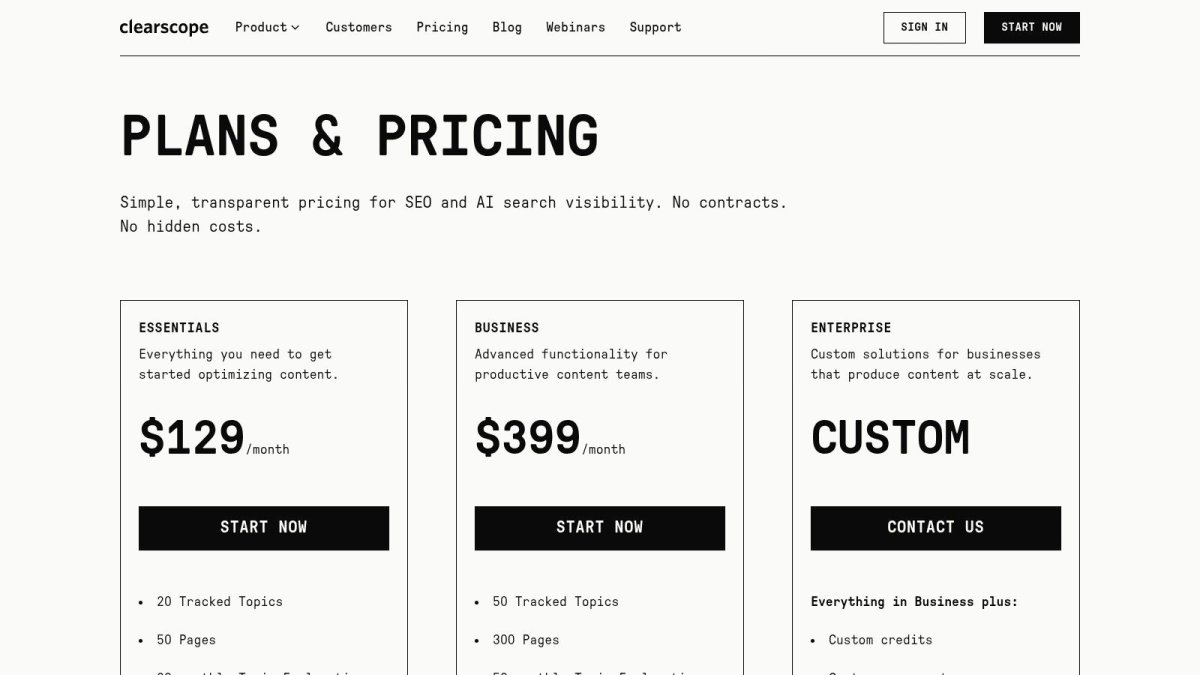
3. Clearscope
Clearscope is what you buy when you want fewer opinions and cleaner editorial execution.
A lot of AI SEO tools throw too much at writers. Clearscope does the opposite. It keeps the workflow focused, which is one reason enterprise teams and serious editorial operations keep it in the mix.
Who should buy it
If you run multiple brands, use freelancers, or hand off briefs across departments, Clearscope is strong. Its grading system, topic discovery, AI-assisted drafting, and content inventory tools help standardize what “good” looks like.
That matters because AI-specific SEO tooling is projected to grow to USD 32.6 billion by 2035 at a 23.4% CAGR, while broader SEO software spending is estimated at USD 74.6 billion in 2024 and forecast to reach USD 154.6 billion by 2030 at a 13.5% CAGR, according to Market.us research on the AI-powered SEO software market. Buyers aren't just paying for keyword suggestions anymore. They're paying for systems that improve content quality and scale editorial control.
Clearscope works best for:
- Editorial managers: It standardizes briefs and writer handoffs well.
- Large content teams: The interface is clean enough that writers use it.
- Multi-brand operations: Inventory and tracked topics are useful when content sprawl becomes a problem.
Where it falls short is obvious. It's premium software, and it's mostly about content quality, not store operations. If you're a Shopify merchant trying to fix indexing issues, automate schema, or improve AI platform discoverability, Clearscope won't cover that side of the job.
But if your content team needs consistency and a tool writers won't fight, Clearscope is still one of the cleanest choices available.
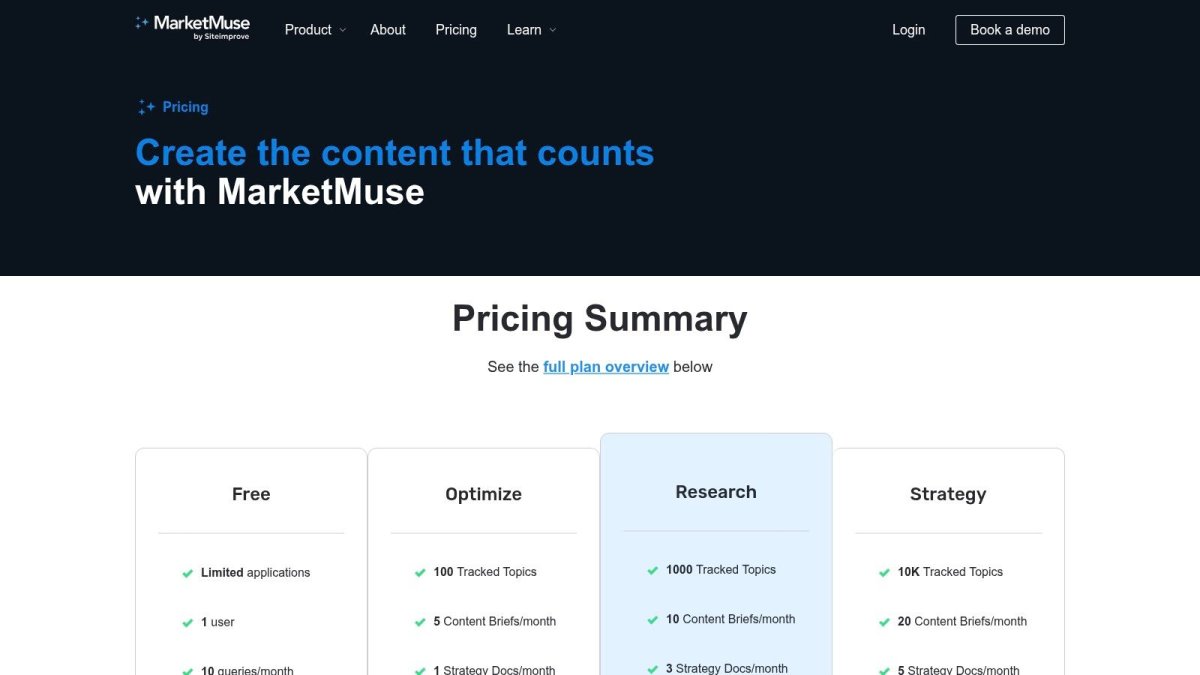
4. MarketMuse
MarketMuse is for strategy-heavy teams. If Surfer tells you how to improve a page, MarketMuse helps you decide which pages should exist in the first place.
That makes it valuable for brands with sprawling sites, broad category coverage, or old content libraries that need prioritization.
Where it earns its keep
MarketMuse shines in inventories, topic planning, and roadmap decisions. Its proprietary metrics, tracked topics, and brief types give content leaders a better way to decide what to build, update, merge, or drop.
This isn't the fastest way to crank out product copy. It's a better way to stop wasting months on low-impact content.
Here's where it's strongest:
- Content roadmapping: Good for deciding what to publish next across categories and subtopics.
- Topic authority planning: Useful when you want to build depth, not just isolated pages.
- Portfolio-level decisions: Better for content programs than one-off article production.
Most content teams don't have a writing problem. They have a prioritization problem.
The tradeoff is the learning curve. MarketMuse rewards teams that commit to a real content program. If you only need quick briefs and drafts, it can feel like too much software. If you want a serious planning layer over a large site, MarketMuse is one of the stronger options.
5. Frase
Frase is the practical pick for lean teams that need speed without paying enterprise-tool prices.
It combines SERP research, brief generation, AI writing, and optimization in a way that's easy to adopt. That's why small marketing teams, solo operators, and scrappy DTC brands often get value from it fast.
Why lean teams like it
Frase is good when you need to move from keyword to outline to draft without opening five tools. The workflow is straightforward, and the Google Search Console integration helps teams tie content work back to performance.
If you're running a content-heavy Shopify store, it pairs naturally with product-focused AI workflows. For merchants exploring automated product and article creation, this guide to an AI article generator for Shopify store content is a useful companion read.
Frase makes sense if you want:
- Fast brief creation: Good for writers who need structure quickly.
- Simple optimization: The editor is easy to use without much training.
- Affordable breadth: Research, writing, and scoring in one place.
Its limitations are also clear. Heavy usage means watching document and credit limits, and it doesn't offer the governance or technical depth you'd expect from higher-end platforms. It's a content workflow tool first.
For lean teams that care about value and speed, Frase is a strong buy.
6. Semrush Content Toolkit
If you already live inside Semrush, using Semrush Content Toolkit is the obvious move.
You get topic ideas, outlines, AI article drafts, and publishing workflows tied to the broader Semrush ecosystem. That creates less friction than bolting on a separate writing platform.
Best for current Semrush users
This is not the tool I'd buy first if I had no existing stack. But if your team already uses Semrush for keyword research, competitor analysis, and broader SEO work, adding the content layer is efficient.
That recommendation lines up with how marketers are using AI today. HubSpot and Salesforce, as summarized in the verified data cited earlier, describe the most effective AI workflows as those where AI speeds audits, drafting, data analysis, and repetitive tasks while humans keep control of strategy and final judgment. Semrush Content Toolkit fits that middle-of-workflow role well, especially inside established teams.
It's strongest in three situations:
- Semrush-first workflows: You want research-to-draft continuity.
- Multi-language content programs: It supports broader publishing needs.
- Teams that hate tool sprawl: One ecosystem is easier to manage than five vendors.
The caution is cost stacking. It's most useful when paired with an active Semrush subscription, so buyers need to check plan coverage carefully. Still, if you already trust the platform, Semrush Content Toolkit is a sensible extension.
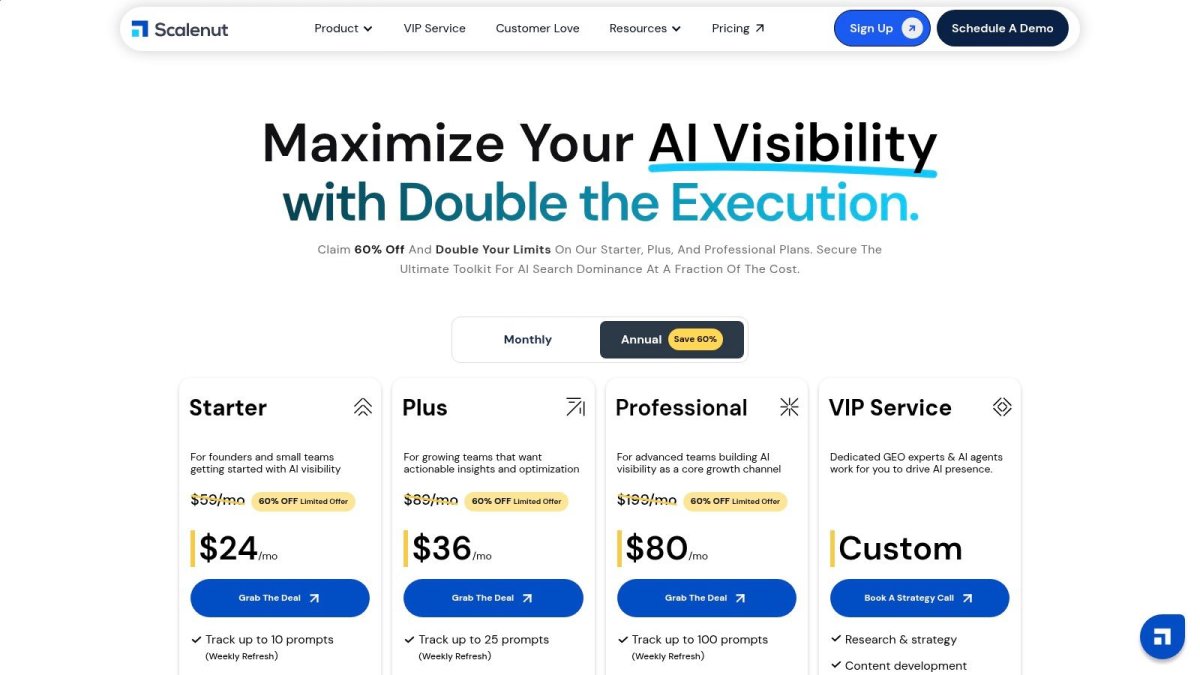
7. Scalenut
Scalenut is for teams that want broad feature coverage without paying premium-suite prices.
It blends keyword planning, clustering, long-form AI writing, optimization, and supporting utilities into one package. For SMBs and agencies, that mix can be attractive.
Where it makes sense
Scalenut is strongest when your team needs to standardize content production. The cluster-first planning is helpful for building topic groups, and the writing workflow is geared toward getting drafts out quickly.
For merchants focused on catalog SEO, pairing a planning tool with stronger product-page workflows matters. If product copy is your bottleneck, this look at an AI product description generator complements what Scalenut does on the planning and drafting side.
Scalenut is a good fit for:
- SMBs: Broad functionality at an aggressive value point.
- Agencies: Useful for templated production across multiple clients.
- Teams building topic clusters: The planning layer is practical.
Its weakness is governance. You'll need editorial review, especially if brand voice and factual precision matter. It's productive software, not self-managing software.
If you want a broad AI SEO toolkit without jumping to enterprise pricing, Scalenut deserves a look.
8. Outranking
Need more than a content score? Outranking is built for teams that want to plan, write, optimize, and connect pages inside one system.
That matters for eCommerce brands with growing content libraries. If you are publishing buying guides, collections support content, and comparison pages, scattered tools create sloppy workflows fast. Outranking is stronger when you need structure, not just another AI writer.
Where Outranking actually helps
Outranking stands out for keeping content tied to search intent and SERP context while also supporting briefs, drafting, optimization, and internal linking. That mix is useful for merchants building topical authority around categories, use cases, and seasonal demand.
It is a better fit for strategy-led teams than for beginners who just want a simple editor. The platform asks you to think in terms of content systems, page relationships, and workflow discipline. That is a good thing if your SEO problem is inconsistency.
Outranking makes sense for:
- eCommerce teams building content hubs: Helpful when blog content needs to support collections, category themes, and long-tail discovery.
- Brands managing larger site structures: Internal linking support is useful once your content library starts getting messy.
- Teams publishing in multiple markets: Multi-language capabilities can help support broader SEO programs.
The catch is usability. The interface can feel crowded, and setup takes patience. If your team avoids process and just wants fast drafts, this will feel heavier than it should.
If you want a tool that treats SEO content like a system instead of a one-off article factory, Outranking is a serious option.
9. NEURONwriter
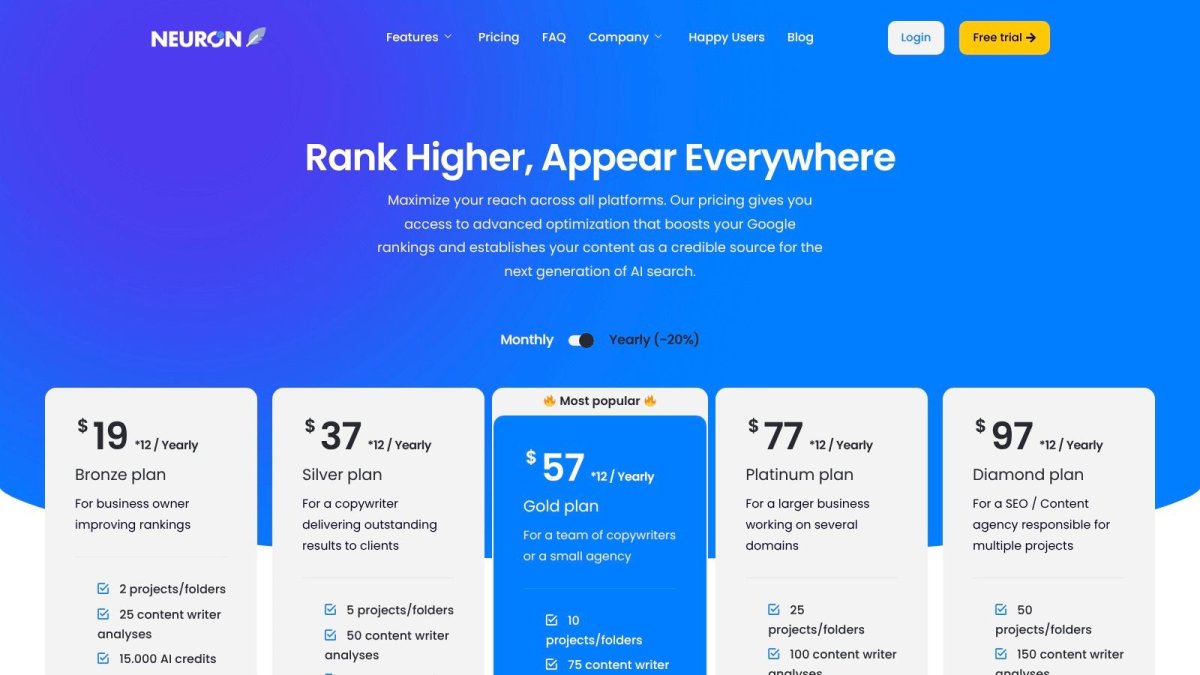
NEURONwriter is the budget-conscious choice for people who mostly want semantic optimization without paying premium-tool rates.
It's often the tool people land on after realizing they like Surfer-style optimization but don't need the full weight, polish, or cost of a bigger platform.
Best budget pick for optimization
NEURONwriter focuses on what smaller teams use. You get SERP- and NLP-driven recommendations, content scoring, drafting help, and internal linking suggestions. For bloggers, niche publishers, and small businesses, that's usually enough.
It's a practical tool when you need quick page improvements, especially for informational content and content hubs. It won't impress enterprise procurement teams, but that's not the point.
Why people buy it:
- Lower barrier to entry: Good for solo users and small teams.
- Useful editor: Clear prompts around keyword and entity coverage.
- Fast optimization: Good for updating posts without overcomplicating the process.
The tradeoff is polish and depth. Integrations, documentation, and broader enterprise features lag behind premium competitors. If that doesn't bother you, NEURONwriter is one of the more sensible low-cost options.
10. Alli AI
Need SEO changes live this week, not after a month in the dev queue? That's the problem Alli AI solves.
It's built for teams that already know what to fix but can't get those fixes deployed across the site fast enough. The core appeal is simple: push on-page SEO updates at scale through a script-based setup instead of waiting on engineering for every title tag, meta description, schema tweak, or internal link update.

Best for execution bottlenecks
For large eCommerce sites, speed matters. A catalog with hundreds or thousands of URLs can't rely on manual page-by-page edits, and Shopify merchants with multiple collections, product templates, or expansion stores run into this fast. Alli AI is useful when the primary blocker is implementation, not strategy.
That makes it a better fit for operators than writers.
Use cases where it earns its keep:
- Large catalogs: Roll out changes across many pages without manual editing.
- Agencies: Manage optimization across multiple client sites from one workflow.
- Teams stuck behind engineering tickets: Ship routine SEO updates faster.
The tradeoff is control. Script-based changes can save serious time, but they also need tight review. If your brand rules, product data, or template logic are messy, bad automation spreads mistakes just as fast as good automation spreads improvements.
My take: Alli AI is worth considering if your team already has solid SEO direction and keeps losing momentum at the implementation stage. If you're a Shopify merchant looking for direct revenue impact, be careful. Fast deployment is useful, but execution tools only pay off after you know which pages, collections, and product templates deserve attention first. If that's your bottleneck, Alli AI is a practical option.
Top 10 AI SEO Optimization Tools: Feature Comparison
| Tool | Core features | UX / Quality ★ | Price / Value 💰 | Target audience 👥 | Unique selling point ✨ |
|---|---|---|---|---|---|
| wRanks 🏆 | Shopify-native audits, AI meta/product copy, AI Blog Writer, schema, geo keyword & AI-visibility tracking | ★★★★★ | Free plan + transparent upgrades 💰 | Shopify merchants & agencies 👥 | Search + AI-discovery focus; fast indexing; no storefront JS ✨ |
| Surfer SEO | NLP-driven Content Editor, page audits, briefs, Surfer AI drafts | ★★★★☆ | Mid–high; AI add-ons can add cost 💰 | Content teams & SEOs 👥 | Granular, score-based on-page guidance ✨ |
| Clearscope | Content grading, Topic Explorer, AI drafts, CMS/editor integrations | ★★★★☆ | Premium / higher entry price 💰 | Enterprises & high-volume publishers 👥 | Reliable scoring and editorial UX for briefs ✨ |
| MarketMuse | Topic inventories, Personalized Difficulty & Topic Authority, briefs, SERP research | ★★★★ | High; best for full programs 💰 | Content strategists & enterprise teams 👥 | Deep topic modeling & strategic prioritization ✨ |
| Frase | SERP-based briefs, in-editor AI writer, GSC integration, site chatbot option | ★★★☆ | Affordable entry; credit limits apply 💰 | Lean teams, SMBs & solo creators 👥 | Fast briefs + site-specific chatbot (Frase Answers) ✨ |
| Semrush Content Toolkit | Topic ideas, AI drafts, Semrush real-time data, one-click publish | ★★★★ | Best value with Semrush subscription (cost stacks) 💰 | Semrush users, agencies, multilingual teams 👥 | Tight integration with Semrush research & data ✨ |
| Scalenut | Keyword planner & clustering, Cruise Mode long-form AI, on-page audits | ★★★★ | Aggressive pricing / strong breadth-for-price 💰 | SMBs & agencies standardizing ops 👥 | Cluster-first planning + aggressive feature rollout ✨ |
| Outranking | AI briefs/drafts, keyword clustering, internal linking, content scoring | ★★★★ | Mid-level; add-ons for characters 💰 | Teams needing briefs→draft→optimize workflows 👥 | SERP-anchored "Concepts" to reduce hallucinations ✨ |
| NEURONwriter | SERP/NLP terms, drafting aids, internal linking, project tiers | ★★★ | Budget-friendly for solo/small teams 💰 | Solo creators & small content teams 👥 | Low-cost semantic SEO editor with clear prompts ✨ |
| Alli AI | Automated crawl recommendations, one-click code deployments, white-label reporting | ★★★★ | Pricey for small sites; scales for large catalogs 💰 | Agencies, multi-site portfolios, e‑commerce catalogs 👥 | Automates code-level on-page fixes at scale ✨ |
Final Thoughts
Most AI SEO optimization tools are sold like magic. They aren't magic. They're workflow tools. If the workflow is wrong, the software becomes an expensive distraction.
For eCommerce and Shopify merchants, the biggest mistake is buying a content tool when the actual bottleneck is implementation. Maybe your titles are weak. Maybe your product pages are thin. Maybe schema is missing, pages aren't getting indexed fast enough, redirects are messy, or no one on your team can tell whether your brand shows up in AI-generated answers. Those are business problems, not writing problems.
That's why the best tool depends on what's broken.
If you need the strongest Shopify-native option, wRanks is the best recommendation on this list. It covers the essential stack merchants need: technical audits, on-page AI content, schema, indexing, redirect management, rank tracking, and AI visibility monitoring. It's the closest thing here to an operating system for Shopify SEO.
If your main issue is editorial quality, Clearscope and Surfer are both strong. Clearscope is cleaner and better for standardized handoffs. Surfer is better if you want aggressive, score-based optimization workflows. If strategy and prioritization are the issue, MarketMuse is better than either. It helps teams decide what deserves attention before they spend another month publishing low-impact pages.
If you want speed on a tighter budget, Frase, Scalenut, and NEURONwriter all have a place. Frase is the easiest practical choice for lean teams. Scalenut offers broad functionality for the money. NEURONwriter is the low-cost optimizer handling the basics effectively. Outranking is a solid middle-ground choice when you want stronger structure and grounding than cheaper content tools usually provide.
And if your SEO team keeps saying, “We already know what to fix, we just can't get it live,” then Alli AI is the blunt instrument worth considering.
The bigger shift is this. AI SEO has moved from experimentation to infrastructure. Teams are using it for drafting, yes, but also for audits, prioritization, implementation, and measurement across traditional search and AI discovery. The merchants who win won't be the ones who publish the most AI content. They'll be the ones who use the right tool to remove operational bottlenecks, protect page quality, and get discovered wherever buyers search next.
If you run Shopify and want one app that handles content, technical SEO, indexing, schema, redirects, keyword tracking, and AI visibility without slowing your storefront, wRanks is the smart place to start. It's built for merchants who want action inside Shopify, not another disconnected dashboard.

About Amira Hassan
Digital growth consultant specializing in AI-powered commerce strategies. Amira bridges the gap between cutting-edge AI tools and practical Shopify store growth.