
E-commerce SEO
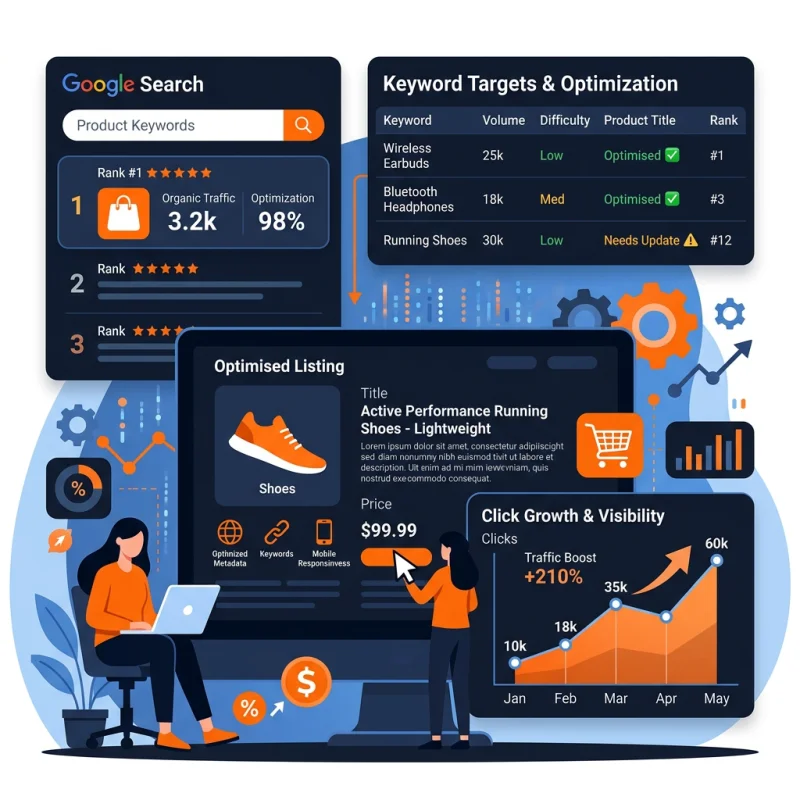
Quick Definition
E-commerce SEO is the practice of optimizing an online store's structure, category descriptions, and product pages to rank higher in organic search engine results.
Table of Contents
- Understanding E-commerce SEO
- Implementing E-commerce SEO on Shopify
- Step-by-Step Shopify Configuration
- Content and Blog Optimization
- Strategic Business Value of E-commerce SEO
- FAQs about E-commerce SEO
- How do I optimize product pages for SEO?
- What are the best Shopify apps for SEO?
- How important is mobile optimization for E-commerce SEO?
Understanding E-commerce SEO
E-commerce SEO (Search Engine Optimization) refers to the process of optimizing an online store's website structure, product pages, category descriptions, and content to improve visibility in organic search engine results. As the digital marketplace becomes increasingly competitive, effective SEO strategies are essential for online retailers to attract targeted traffic, increase conversions, and grow revenue. Unlike traditional SEO, E-commerce SEO involves unique considerations such as product schema markup, URL structures, and user experience factors tailored specifically for online stores.
Research indicates that over 70% of consumers begin their shopping journey with a search engine, making organic visibility a critical component of e-commerce success. Properly optimized product listings can significantly enhance click-through rates and reduce reliance on paid advertising. Moreover, E-commerce SEO encompasses technical elements like site speed, mobile responsiveness, and structured data, which directly influence search rankings and user engagement. In essence, E-commerce SEO is a comprehensive approach that combines keyword research, on-page optimization, technical enhancements, and content strategies to ensure your online store ranks higher and attracts quality traffic.
Implementing E-commerce SEO on Shopify
Step-by-Step Shopify Configuration
- Optimize Your Store's Structure: Ensure your navigation is logical and user-friendly. Use clear categories and subcategories to help both users and search engines understand your site hierarchy. Shopify's admin panel allows you to organize collections and menus under Navigation Settings.
- Configure SEO Settings for Products and Collections: Edit each product and collection to include unique, keyword-rich titles and descriptions. Use Shopify's built-in SEO fields found under Online Store > Products and Collections. Incorporate primary keywords naturally without keyword stuffing.
- Optimize URLs and Permalinks: Shopify automatically generates URLs based on product and collection titles, but you can customize them for clarity and keyword relevance. Keep URLs short, descriptive, and free of unnecessary parameters.
- Implement Structured Data: Use schema markup to enhance search listings with rich snippets like star ratings, product availability, and price. Shopify apps like SEO Manager can facilitate schema implementation.
- Improve Site Speed and Mobile Responsiveness: Use Shopify's theme editor to select fast, mobile-optimized themes. Compress images and leverage Shopify's built-in CDN to reduce load times. Google's Web.dev provides tools to assess and enhance site performance.
- Set Up Redirects and Canonical Tags: Prevent duplicate content issues by setting up 301 redirects for changed URLs and canonical tags for duplicate pages. Shopify's URL redirect feature is accessible under Online Store > Navigation > URL Redirects.
Content and Blog Optimization
Adding a blog to your Shopify store can boost SEO by providing fresh, relevant content. Use keyword research tools like Google Keyword Planner or Ahrefs to identify high-volume keywords related to your niche. Incorporate these keywords into blog titles, headings, and content naturally. Internal linking between product pages and blog posts enhances site structure and distributes link equity, which search engines favor.
Additionally, optimize images within your blog posts with descriptive alt text, which not only improves accessibility but also helps search engines understand your content. Regularly updating your blog with valuable content can establish authority and improve your store's ranking for long-tail keywords.
Strategic Business Value of E-commerce SEO
Effective E-commerce SEO is a cornerstone of sustainable online business growth. It reduces dependency on paid advertising by increasing organic traffic, which is often more cost-effective in the long run. Higher search rankings lead to increased visibility, brand authority, and customer trust. For example, studies show that the first organic search result garners approximately 28.5% of clicks, emphasizing the importance of ranking well.
Optimized product pages with rich snippets can improve click-through rates significantly. For instance, displaying star ratings and availability directly in search results can attract more clicks and conversions. Moreover, SEO-friendly URLs and fast-loading pages enhance user experience, decreasing bounce rates and encouraging repeat visits.
Real-world examples include brands like Gymshark and MVMT, which leverage SEO to dominate their niche markets. They invest in keyword research, content marketing, and technical SEO to maintain high rankings. Implementing structured data, optimizing for mobile, and creating quality content are proven tactics that contribute to these successes.
To maximize your SEO efforts, regularly monitor your performance with tools like Google Search Console and Shopify Analytics. Adjust your strategies based on data insights, focusing on high-converting keywords and pages. Remember, SEO is an ongoing process that requires consistent effort and adaptation to algorithm changes.
FAQs about E-commerce SEO
How do I optimize product pages for SEO?
Optimizing product pages involves crafting unique, keyword-rich titles and descriptions that accurately describe your products. Use relevant keywords naturally within your content, and include high-quality images with descriptive alt text. Implement schema markup to enhance search listings with rich snippets like star ratings and price. Additionally, ensure your URLs are clean and descriptive, and avoid duplicate content by setting canonical tags. Regularly update product information and monitor performance through analytics tools to refine your SEO strategies.
What are the best Shopify apps for SEO?
Some of the top Shopify apps for SEO include SEO Manager, which simplifies meta tag editing and schema markup, and Rich Snippets, which helps implement structured data. Other useful apps are Plug in SEO for comprehensive site audits and Avada Page Speed to optimize loading times. These tools streamline technical SEO tasks and improve your store's search performance.
How important is mobile optimization for E-commerce SEO?
Mobile optimization is critical for E-commerce SEO because over 60% of online shopping traffic originates from mobile devices. Google's mobile-first indexing means that the search engine primarily considers your mobile site for ranking. A responsive, fast-loading mobile site enhances user experience, reduces bounce rates, and increases conversions. Shopify themes are generally mobile-responsive, but it's essential to test your site's mobile performance regularly using tools like Google's Mobile-Friendly Test. Prioritize optimizing images, simplifying navigation, and ensuring quick load times to maximize your mobile SEO success.

About Sarah Mitchell
Senior SEO strategist with 8+ years in e-commerce search optimization. Sarah helps Shopify merchants turn organic traffic into revenue through data-driven content strategies.