What Is Organic Search Traffic? A Shopify Guide
What is organic search traffic and why it matters for Shopify stores. Understand how unpaid search visits differ from direct and referral traffic.
What organic search traffic means for a Shopify store
You open your Shopify analytics before breakfast and see sessions climbing. Still, you can't tell whether shoppers found a product through Google, clicked an ad, followed a link, or typed your store address. You publish another blog post, change a product title, and watch the numbers move without knowing which effort brought useful visits. That’s the practical question behind what is organic search traffic.
Most Shopify merchants don't have a traffic problem. They have an attribution problem. Unpaid search visits matter only when you can connect them to useful landing pages, product activity, and revenue. Semrush defines organic traffic as visits from unpaid search results, while Similarweb separates organic results from paid search results.
How organic search traffic differs from other visits
A shopper who searches Google for a waterproof hiking jacket and selects your unpaid product listing creates organic search traffic. Typing your URL creates a direct visit, clicking a publisher's link creates a referral visit, and selecting a sponsored result creates paid search traffic. This guide connects impressions and clicks with Shopify landing pages, add-to-carts, purchases, and revenue, while showing how wRanks helps you assess page performance without claiming every visit can be perfectly attributed. The Shopify Search Console verification guide fits the same measurement workflow.
Why Organic Search Traffic Matters More Than a Session Count
You need more than a rising session total to know whether Google is sending valuable shoppers to your Shopify store. A session tells you that someone arrived. It doesn't tell you whether that person reached the right product, added an item to the cart, started checkout, or purchased.
Organic traffic is useful because it can connect your products with people already searching for what you sell. The business value appears only when search visibility leads to qualified landing-page visits and measurable store activity.
What organic traffic means in simple terms
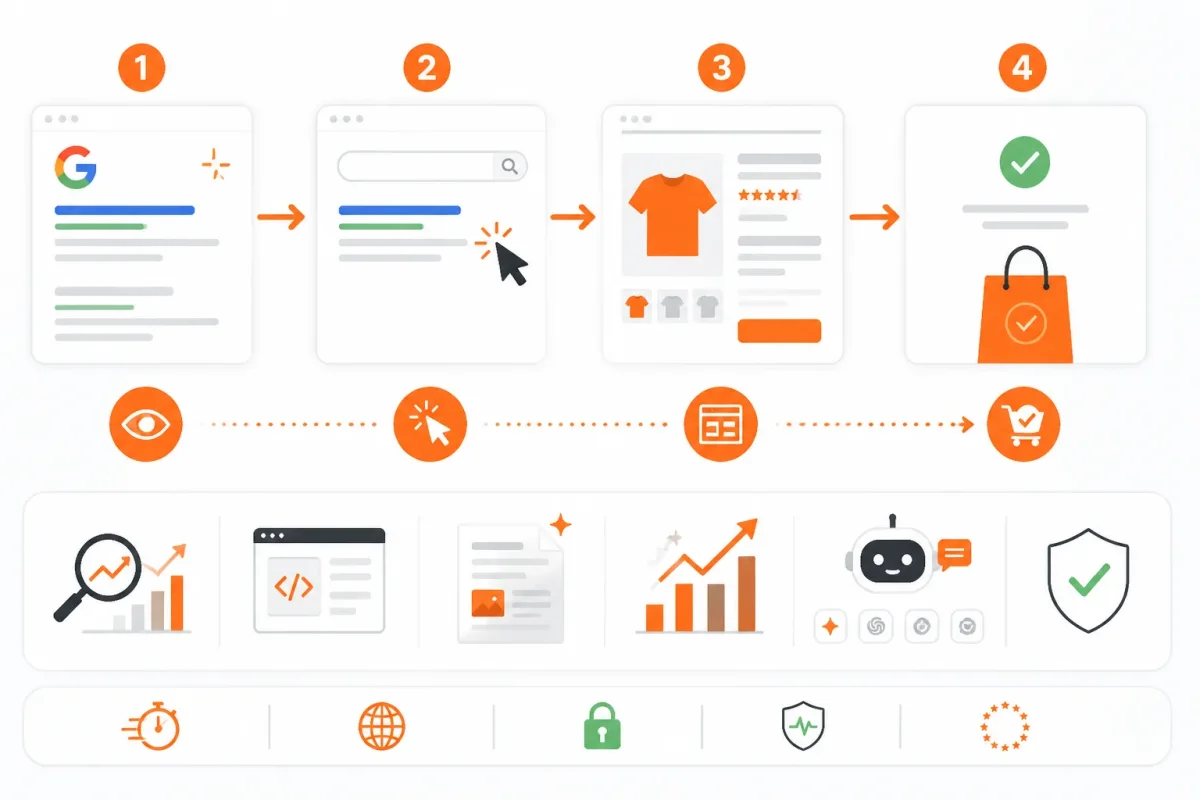
Organic traffic is a visit from an unpaid search result, not simply any visit that costs no advertising click. When someone searches for “women's waterproof hiking jacket” and selects your unpaid Shopify product result, that visit is organic search traffic.
Semrush describes increasing organic traffic as a main SEO goal because it brings people looking for a relevant offer. It also reports that organic traffic can provide a steady stream of visitors while your content remains useful and optimized. That potential is real, but it isn't automatic.
“Although organic traffic is free, you still need to invest in SEO and content marketing to improve your search visibility,” according to Semrush.
The cost of treating every unpaid-looking visit as SEO success
If you label every unpaid-looking session as SEO success, you may invest in product pages while measuring direct visits, referral clicks, or poorly tagged campaigns. You might also celebrate high impressions that produce few clicks, then miss a collection page that attracts fewer searches but drives more add-to-carts.
Ranking position alone is a weak decision tool. One competitor research claim points to more than 255 factors that can influence rankings, so your attention belongs on traceable outcomes rather than one reported position. Unpaid traffic is not cost-free to produce. You still pay through content planning, technical work, structured data, image alt text, and ongoing optimization.
The rule for connecting search visibility to store revenue
Connect the chain in your reports: impressions in Google Search Console, clicks to the landing page, relevant product interactions in analytics, checkout starts, purchases, and revenue. You can use keyword tracking and Search Console integration in wRanks to inspect this path, although no platform can perfectly assign every conversion to one search interaction.
Semrush notes that organic growth takes consistent effort before you reliably see results. That makes qualified landing-page behavior more useful than a temporary rankings spike or a large session count.
Practical rule: Judge organic search by qualified landing-page behavior and revenue contribution, not by sessions or rankings alone.
Organic Search, SEO, and Search Engine Traffic Are Related but Not Identical
You can optimize a Shopify product page without receiving a single organic visit. A shopper can search for “black leather tote,” Google can show your unpaid result, and the shopper can still choose another listing. Those are separate events.
Similarweb describes organic search as content found and ranked naturally, without paid advertising influencing its placement. Similarweb also defines SEO as work that improves a website or page’s visibility and ranking. Your store needs both concepts separated to connect search behavior with actual traffic.
Organic search and SEO are not the same
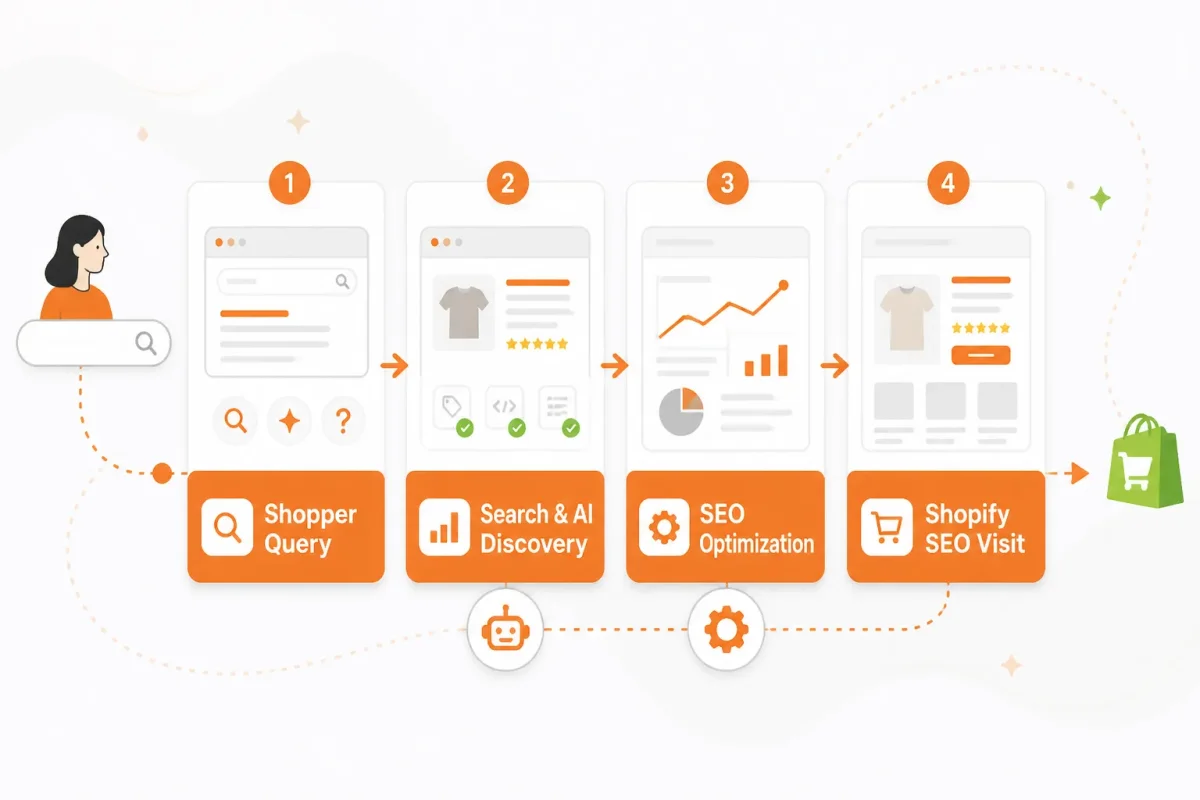
No. Organic search is the shopper’s unpaid search path, while SEO is the work intended to improve your eligibility and visibility. Your query, Google result, click, and optimization form four related layers:
- Search behavior: You search for a need, such as “women’s waterproof hiking jacket.”
- Unpaid result: Google displays your Shopify product, collection, page, or blog URL without sponsored placement.
- Organic visit: You receive a website session after the shopper clicks that unpaid result.
- SEO work: You improve meta tags, structured data, image alt text, content, internal links, or backlinks to support visibility.
A weak product title might be “Jacket | Store.” Waterproof Women’s Hiking Jacket | North Ridge gives Google and shoppers clearer context. The second example is SEO work, not traffic by itself.
What organic search engine traffic means
Organic search engine traffic is a visit to your Shopify store from a click on an unpaid search result. A product URL reached through Google organic results qualifies. The same URL reached through a sponsored listing does not.
Relevance, content quality, site authority, and quality backlinks can affect whether your page appears and where it ranks. Paid placement remains a separate channel, even when the landing page and keyword match your SEO target.
What organic traffic means in SEO
Organic traffic in SEO is the measurable outcome of unpaid search visibility, not the optimization activity itself. Your collection page may have a strong title and structured data, yet it produces no organic traffic until a shopper clicks and arrives.
For Shopify execution, wRanks can help you optimize products, collections, pages, and blogs, then monitor keywords and Google Search Console signals. It is an execution and monitoring layer, not a promise that every change creates a visit. The guide to adding product schema in Shopify fits the same workflow when structured data is part of your page work.
Organic search in digital marketing
| situation | better move | why |
|---|---|---|
| A Shopify product page appears in an unpaid Google result and a shopper clicks it | Classify the resulting visit as organic search traffic | The visit came from a click on an unpaid search result |
| A collection page is optimized with a keyword, title, and structured data but receives no search click | Record the work as SEO, then monitor impressions and clicks | Optimization is not traffic until it produces a visit |
| A blog post is reached through a sponsored search advertisement | Classify the visit as paid search | Sponsored placement is separate from organic search |
| A product page is reached from a link on an industry publication | Classify it as referral traffic | The shopper arrived from another website rather than a search result |
How a Google Query Becomes an Organic Shopify Visit
You see organic search traffic when a shopper searches Google, finds your unpaid listing, and visits your Shopify store. The journey starts with an impression, not a sale. Your collection page must first be accessible, relevant, and useful enough to earn attention.
Picture a shopper searching for “women’s waterproof hiking jackets.” Google displays a sponsored product listing first, followed by an unpaid result for your “Waterproof Hiking Jackets” collection. The shopper clicks the unpaid result, views a jacket, adds it to the cart, and completes checkout. That sequence turns search visibility into an organic Shopify visit and, potentially, revenue.
An example of organic search
An example is a shopper finding your unpaid Shopify collection result after searching for a product category on Google. The impression shows visibility, the click creates the organic visit, and the later checkout connects that visit to business value.
A sponsored listing may appear above the collection result, but it belongs to paid search. Similarweb explains that advertisers sponsor paid results through advertising campaigns, so you should not combine those clicks with unpaid organic visits. Paid placement and organic visibility are separate sources.
| situation | better move | why |
|---|---|---|
| Google shows a Shopify collection page in an unpaid result for a product-category query | Measure the impression, click, landing-page session, and later conversion | A search appearance is visibility; the click creates the organic visit |
| A sponsored product or text result appears above the unpaid listings | Track its visit as paid search rather than organic search | Advertisers pay for the placement and its clicks |
| A product page matches intent but has weak content, unclear metadata, or poor accessibility | Improve technical access, relevance, quality, and page clarity before expecting traffic | Search engines evaluate page and site signals before ranking eligibility |
| An unpaid result receives clicks but shoppers leave without engaging | Review landing-page relevance, product information, speed, and conversion paths | Organic traffic is valuable only when the visit supports a useful business outcome |
Ways to get organic traffic to your website
You get organic traffic by connecting technical access, search intent, page optimization, and measurement. Make your Shopify page crawlable, match the wording and purpose of the query, explain the product clearly, and use structured data where it accurately describes the page. wRanks can help automate meta tags, structured data, alt text, and keyword tracking for Shopify stores, although no platform guarantees rankings.
For the collection example, a weak title might read:
Weak version: Jackets | Store
A stronger version gives Google and shoppers clearer context:
Waterproof Hiking Jackets for Women | Free U.S. Shipping
The stronger title supports the query, while useful product details, updated inventory, clear images, and a direct path to checkout support the visit after the click. The guide to Shopify product title SEO fits this same page-optimization workflow.
Similarweb identifies relevance, content quality, authority, and quality backlinks as factors that can affect a page’s chance of appearing in organic results. Those signals influence eligibility and visibility, not a guaranteed position. wRanks helps you monitor related work, but your content still needs to satisfy the shopper.
What organic search traffic means on Google
Organic search traffic on Google is the visits you receive after shoppers click unpaid results. In Google Search Console, you can connect impressions and clicks to the collection page, then use analytics to inspect the landing-page session, product view, cart addition, and checkout conversion.
Semrush notes that organic search can continue sending clicks while your content remains live, relevant, and high-quality. Paid traffic, by contrast, stops when advertising spend stops. Your unpaid visibility still requires maintenance, accurate product information, and content that continues to answer the search.
Where the Traditional Organic Search Definition Stops Being Enough for Shopify SaaS
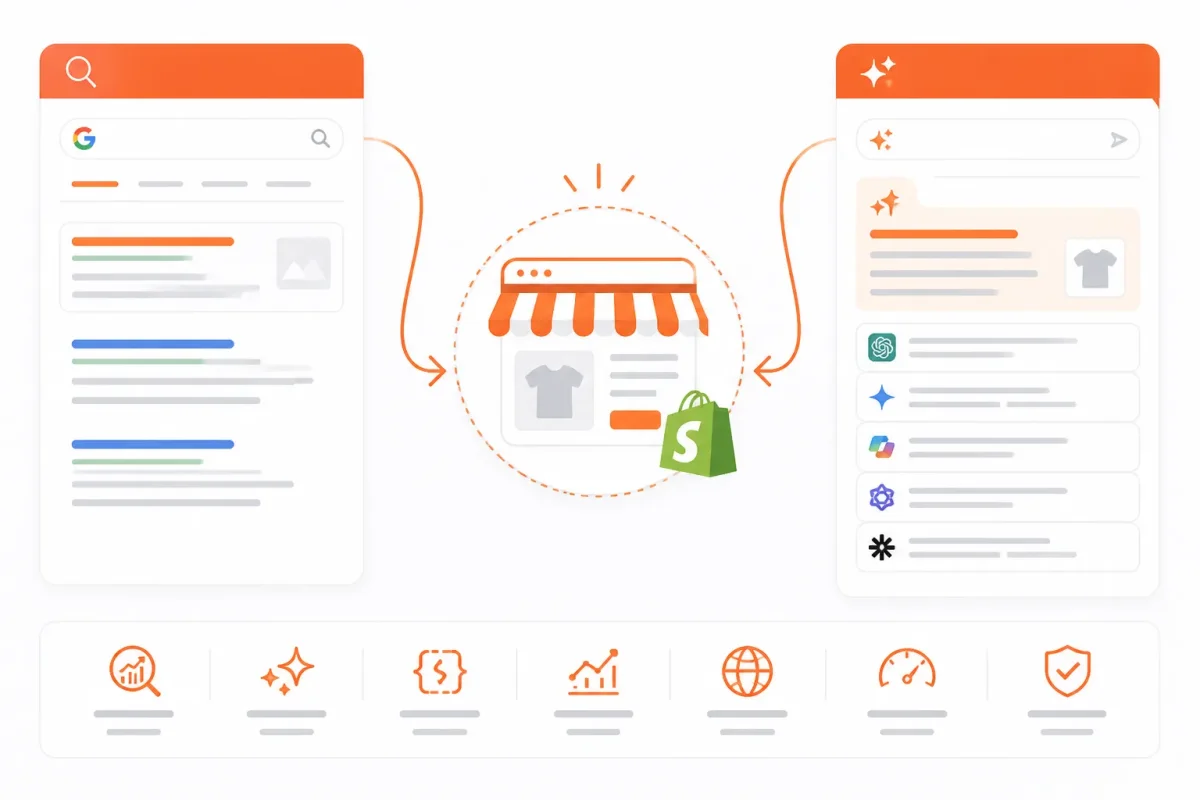
Your Shopify store can now appear in an AI Overview, AI Mode response, or an external AI platform without following the old ten-blue-links path. You may gain visibility, influence a buying decision, or receive a citation click before analytics records any familiar organic session.
That changes the route, not the standard. You still need useful, crawlable pages, accurate product facts, structured data, and citations that support what your store claims. AI-assisted visibility is not automatically organic search traffic.
SEO still matters with AI
No, SEO is not dead because you still need discoverable pages that search systems can understand and trust. AI Overviews may summarize your content, while a citation click inside a search feature may remain within the search ecosystem instead of becoming a traditional blue-link visit.
A visit from ChatGPT or Perplexity can appear as referral or direct traffic in standard analytics, not organic traffic. Semrush states that traffic from AI search platforms such as ChatGPT and Perplexity does not count as organic traffic, according to its August 10, 2026 guidance.
Why SEO isn't outdated
SEO is not outdated, but a narrow focus on rankings is. You now need to track visibility across classic results, AI-generated answers, product comparisons, and citations while still improving the Shopify pages behind those appearances.
Useful content remains the foundation. For example, a weak product title says “Premium Bottle,” while a stronger version says “Insulated 24-Ounce Stainless Steel Water Bottle for Commuters.” The second version gives search systems and shoppers clearer information about the product, use case, and measurement.
What ChatGPT can do for SEO
ChatGPT can help you draft meta tags, alt text, structured data, keyword clusters, and product copy, but it cannot take responsibility for accuracy or intent. You still need to check pricing, inventory, materials, shipping claims, and whether the page answers the query you want to target.
What AI SEO is called now
You may see this work called AI SEO, generative engine optimization, or answer engine optimization. The label matters less than the practice: make your Shopify content easy to crawl, factually precise, useful to people, and suitable for citation across search and AI platforms.
wRanks helps you scale meta tags, structured data, image alt text, keyword monitoring, and content drafts across Shopify stores, although merchant review remains necessary for product accuracy and brand trust.
What works
- Structured facts: You give search systems clear product names, prices, availability, specifications, and structured data.
- Useful pages: You answer buying questions with original details instead of producing thin variations for every keyword.
- Human review: You check AI-assisted drafts before publishing claims that affect customer confidence or compliance.
What fails
- Blind automation: You publish generated copy without checking inventory, measurements, ingredients, or delivery promises.
- Traffic confusion: You label every AI-platform visit as organic search traffic in your reports.
- Ranking-only thinking: You measure blue-link positions while ignoring citations, impressions, landing pages, and assisted conversions.
AI changes how shoppers reach your store, not your need for pages that are discoverable, trustworthy, and genuinely useful.
Five Organic Search Attribution Mistakes Shopify Merchants Make
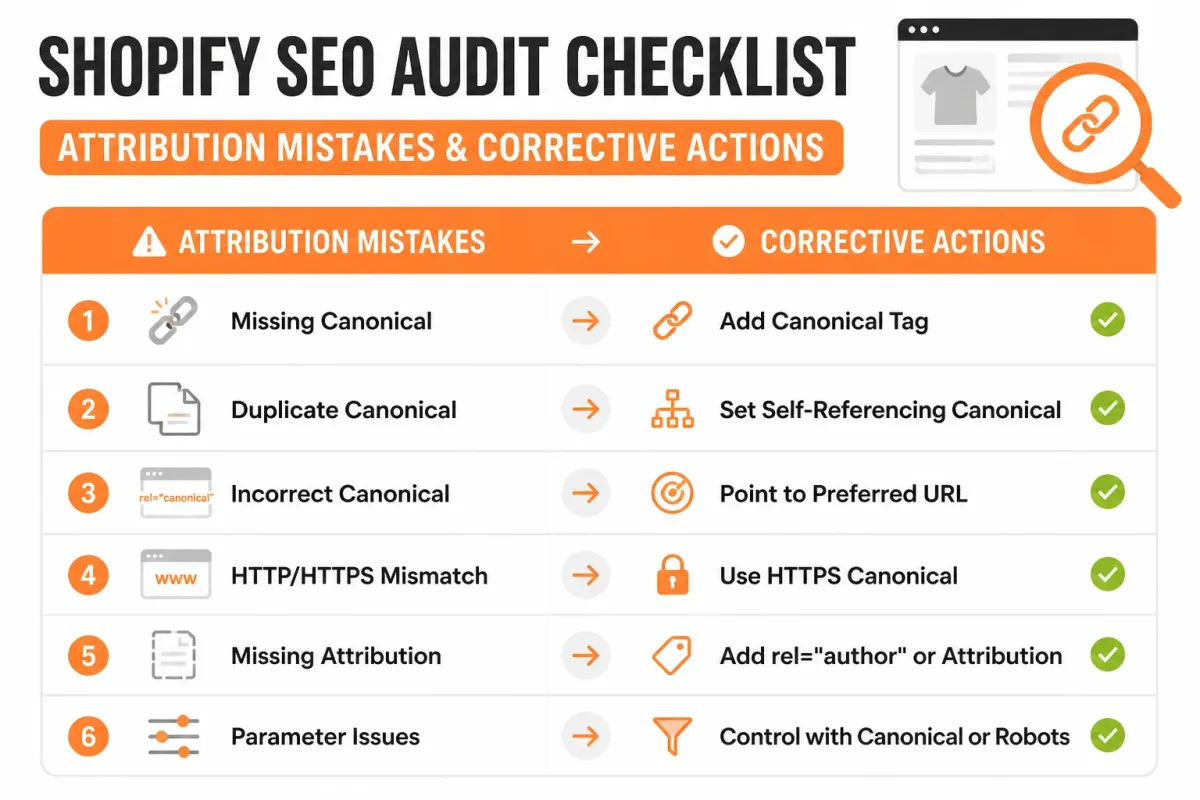
You can report stronger organic search performance without receiving more qualified Shopify shoppers. The usual cause is a measurement error: impressions get treated as visits, paid clicks enter SEO totals, or AI referrals receive a label they have not earned.
Your correction starts with the page, query, source, and conversion together. Use this checklist to separate what Google showed from what your store actually received.
Mistake: treating impressions as traffic
- Check the gap: If your impressions rise while clicks and sessions stay flat, inspect the affected queries and landing pages in Google Search Console. A product appearing for “women’s waterproof hiking boots” is not a store visit. Your correction is to review click-through rate, search position, and page relevance before claiming organic traffic growth.
Mistake: calling paid or AI visits organic
- Compare the source: If you run Google Ads or Shopping campaigns, check source and medium in your analytics before counting those sessions as SEO results. Paid traffic should remain paid. For AI-platform visits, keep the referral detail visible and label uncertainty rather than forcing every unfamiliar session into organic search.
Mistake: optimizing the homepage instead of landing pages
- Map search intent: If your homepage is the only page receiving SEO attention, you are making shoppers search again after arrival. Send product queries to product pages, category queries to collections, and research queries to useful blog pages. You will then connect the query, landing page, and conversion more clearly.
Mistake: changing metadata without a baseline
- Record before editing: Before you change a product title or meta description, save its current impressions, clicks, sessions, and conversions. Afterward, compare the same page and query set. Without that baseline, you cannot tell whether a new “Black Leather Tote” title improved discovery or simply coincided with seasonal demand.
Mistake: trusting channel labels without checking source data
- Inspect referral details: If an AI platform sends shoppers to your Shopify store, your analytics tools may not classify each visit consistently. Check referral information, campaign parameters, landing pages, and conversion paths. Mark unknown traffic as uncertain instead of presenting an invented channel total as fact.
wRanks can help you create and monitor page-level SEO changes across products, collections, pages, and blogs. You still need clean baselines and thoughtful interpretation to know what your organic search traffic means.
How to Read Organic, Direct, and Referral Traffic in Google Analytics for Shopify
You need two measurement views to understand your Shopify traffic. Google Search Console shows how Google searchers discovered your pages, while Google Analytics shows what happened after they arrived on your store.
These systems will not match perfectly. You can still find useful agreement by comparing impressions, clicks, landing pages, sessions, engagement, conversions, and revenue for the same Shopify URL.
What direct traffic means
Direct traffic is a visit where analytics cannot identify a usable referring source. You may assume the shopper typed your store address, but untagged links, privacy controls, app browsers, and missing referral data can also produce a direct classification.
For example, you might see a direct session landing on a product page after a shopper opened a link from an email or messaging app. Check campaign tagging, landing pages, and browser details before treating that session as a deliberate typed visit.
What direct traffic means in Google Analytics
In Google Analytics, direct traffic usually appears under the direct channel when no reliable source or medium reaches the property. You can review the landing page, engagement, conversion event, and revenue, but the original acquisition source may remain unknown.
Search Console cannot explain that session. It can show whether the same Shopify URL received Google impressions, clicks, and search queries. Your analytics report then shows whether those visits engaged with the page or produced a purchase.
What referral traffic means
Referral traffic is a visit from another website rather than an unpaid search result. A shopper who clicks a product mention on a publication, partner site, or affiliate page enters your Shopify store as referral traffic.
Review the referring source and medium, then compare the landing page and conversion path. If an AI platform sends the visit, your analytics property may classify it as referral or direct, so inspect the source details instead of assigning certainty that the data cannot support.
Organic, direct, and referral traffic for a website
Organic search means a shopper visited from an unpaid search result. Search Console supplies impressions, clicks, queries, and landing pages for Google search. Analytics supplies sessions, engagement, conversions, and revenue after the visit begins.
You can combine keyword tracking and Search Console integration in wRanks across product, collection, page, and blog URLs, then use analytics to test commercial outcomes. wRanks helps centralize those SEO signals, but it cannot recover referral data that a browser or platform never passed through.
| situation | better move | why |
|---|---|---|
| Search Console records an impression and click for a Shopify product URL | Compare the URL with the corresponding analytics landing-page session | Search Console measures Google search activity while analytics measures the site visit |
| A shopper arrives after clicking a link on a publication or partner site | Review referral source and medium | The visit originated on another website, not an unpaid search result |
| Analytics shows a session with no identifiable referrer | Treat it as direct provisionally and check tagging, privacy, and browser limitations | Direct can include visits whose original source was lost |
| A shopper clicks a paid search advertisement | Separate paid search sessions from organic search reporting | The placement was purchased and should not be credited to SEO |
| An AI platform sends a visit with inconsistent referral labeling | Inspect referral details and document the attribution limitation | AI-referred traffic may be classified as referral or direct in standard analytics |
FAQ
What is organic traffic in simple terms
Organic traffic is the visits your website receives from unpaid search results. A shopper searches for “black leather laptop tote,” clicks a product page, and arrives without a paid campaign. Google Search Console records the click, while analytics can help you see what the visitor does after landing, such as viewing products or starting checkout.
What is an example of organic search
Someone searches for “women's waterproof hiking jacket” on Google, then clicks a regular product result from a Shopify store. That visit is organic search traffic. If the shopper clicks a sponsored Shopping listing instead, the visit is paid traffic. The difference is how the visit was earned, not whether the search included a product name.
Is organic search the same as SEO
Organic search and SEO are related, but they aren't identical. Organic search is the unpaid channel and the visits it generates. SEO is the work that helps pages appear there, such as improving titles, product copy, internal links, technical setup, and structured data. You can receive organic traffic without actively doing SEO, but ongoing SEO aims to make that traffic more qualified and consistent.
What is organic search engine traffic
Organic search engine traffic means visits from unpaid listings on a search engine such as Google or Bing. A person enters a query, chooses a non-ad result, and lands on your site. For Shopify, useful measures include the landing page, query, clicks, sessions, add-to-carts, and purchases. These measures separate search visibility from the resulting commercial activity.
How do I get organic traffic to my website
Start with a page that serves a clear search need, then create useful content around a target query. Improve the title, meta tags, headings, product information, internal links, and structured data where appropriate. Make sure the page works well on mobile, then use Google Search Console to monitor impressions, clicks, and queries. For Shopify stores, begin with one product or collection page instead of changing the whole catalog at once.
The Three-Step Organic Traffic Check for One Shopify Page
You don't need to audit every product, collection, and blog post today. Choose one page that matters commercially, then trace what happens from a Google query to your Shopify store and a measurable outcome.
A small, consistent check gives you better direction than a store-wide overhaul. Start with one page-level report, establish your baseline, and make one change you can evaluate.
Choose one product or collection page
- Pick one page: Choose a product or collection page that matches a clear buying intent and already has a target query. Record its URL, target query, current title tag, meta description, and conversion baseline. Your baseline can include add-to-carts, checkouts, purchases, and revenue.
Match Search Console clicks to analytics sessions
- Compare the evidence: Open the page-level report in Google Search Console and review impressions, clicks, queries, and average visibility for your chosen URL. Then compare those signals with the page's landing-page sessions, engagement, add-to-carts, checkouts, purchases, and revenue in analytics. A mismatch is useful diagnostic information, not proof that either platform is broken. Different attribution rules, privacy limits, and reporting windows can produce different totals.
Make one optimization and record the baseline
- Change one thing: Choose one focused improvement, such as clarifying the title and description, aligning the page with search intent, adding useful product information, fixing image alt text, or strengthening structured data. Record the date, the exact change, and the baseline before you publish it.
Weak version: You change the title to “Leather Tote Bag | Shop Now” without recording the original wording or the query it targets.
Strong version: You change the title to Black Leather Work Tote for 15-Inch Laptops | Harbor & Pine, record the original title, and note the target query “black leather laptop tote” before comparing results.
wRanks can help you monitor keywords and optimize Shopify pages, including meta tags, structured data, and image alt text, but your first action remains smaller: open one page-level report and establish a baseline. Use that baseline to decide what to change next.
If you want a faster way to monitor keywords and optimize Shopify products, collections, pages, and blogs, wRanks provides AI-powered SEO tools for Shopify stores, including meta tags, structured data, alt text, and Search Console insights. Find practical guidance in the wRanks SEO blog for Shopify merchants.

AI & GEO specialist helping brands maximize visibility across AI platforms like ChatGPT, Gemini, and Claude. James pioneers generative engine optimization techniques for e-commerce.