
SEO (Search Engine Optimization)
Quick Definition
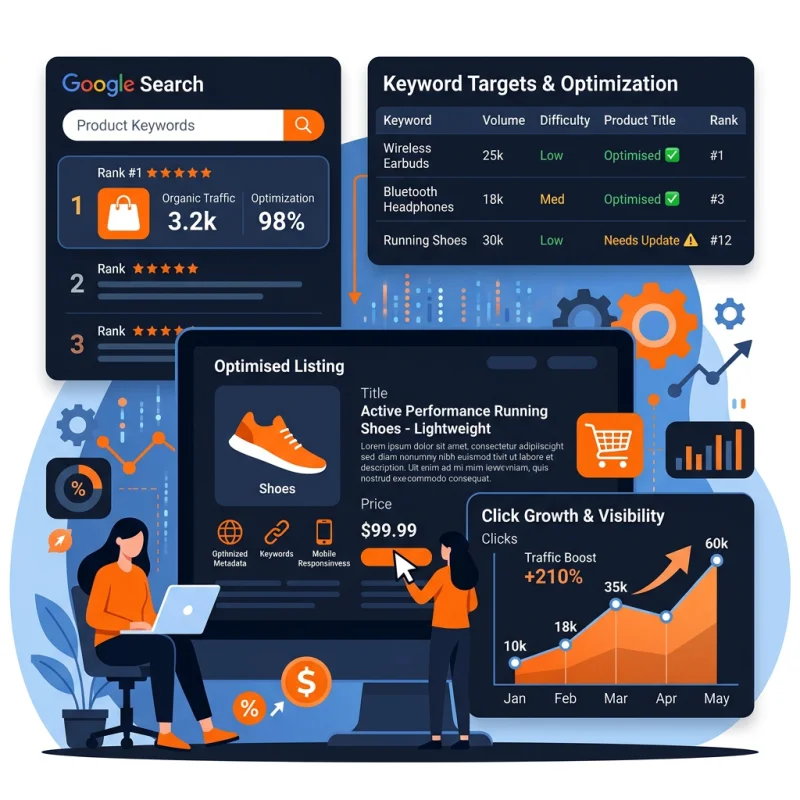
SEO is the practice of optimizing a website's architecture, speed, page content, and backlinks to rank higher in organic search results.
Table of Contents
- Understanding SEO (Search Engine Optimization)
- Implementing SEO on Shopify: Practical Steps
- The Strategic Value of SEO for E-Commerce
- Frequently Asked Questions
- How do I set up SEO for my Shopify store?
- What are the most important SEO ranking factors for Shopify stores?
- Can I improve my Shopify store's SEO without technical skills?
Understanding SEO (Search Engine Optimization)
Search Engine Optimization (SEO) is the strategic process of enhancing a website's visibility in organic search engine results. For e-commerce platforms like Shopify, SEO is crucial for attracting targeted traffic, increasing conversions, and driving revenue without relying solely on paid advertising. SEO involves a multifaceted approach that includes optimizing website architecture, improving page speed, creating high-quality content, and building authoritative backlinks. According to recent studies, over 68% of online experiences begin with a search engine, and organic search accounts for approximately 53% of all website traffic, underscoring the importance of effective SEO strategies for online stores.
In the context of e-commerce, SEO is not just about ranking higher but also about ensuring that your store appears for relevant search queries, matches user intent, and provides a seamless shopping experience. This requires a deep understanding of search engine algorithms, keyword research, technical site optimization, and ongoing content development. Google's algorithms, for example, prioritize websites that are fast, mobile-friendly, secure, and rich in relevant content. Implementing SEO best practices can lead to increased organic traffic, higher conversion rates, and a sustainable competitive advantage in the crowded online marketplace.
Implementing SEO on Shopify: Practical Steps
Optimizing a Shopify store for SEO involves a series of strategic configurations and ongoing efforts. Here is a step-by-step guide to help you enhance your Shopify store's search engine visibility:
- Configure Basic SEO Settings:
- Navigate to Settings > General to set your store's title and meta description, which appear in search results.
- Ensure your store's URL structure is clean and keyword-rich. Shopify automatically generates URLs based on product and collection names, but you can customize them for better SEO.
- Optimize Product and Collection Pages:
- Use descriptive, keyword-rich titles and meta descriptions for each product and collection.
- Write detailed, unique product descriptions that incorporate relevant keywords naturally.
- Implement schema markup for products to enhance rich snippets in search results. You can do this via apps or custom code.
- Improve Site Structure and Navigation:
- Create a logical hierarchy with clear categories and subcategories.
- Use breadcrumb navigation to help both users and search engines understand your site structure.
- Ensure internal linking is strategic, guiding visitors to related products and content.
- Enhance Technical SEO:
- Enable SSL to secure your site (Shopify provides free SSL certificates).
- Optimize site speed by compressing images, leveraging browser caching, and minimizing code.
- Use an XML sitemap (Shopify automatically generates one) and submit it to Google Search Console.
- Fix crawl errors and monitor your site's health regularly.
- Content Marketing and Blogging:
Create a blog to target long-tail keywords, answer customer questions, and establish authority in your niche. Regularly updated content encourages search engines to crawl your site more frequently. - Build Backlinks and Authority:
Engage in outreach, guest posting, and partnerships to earn high-quality backlinks, which are vital for improving domain authority and rankings.
Shopify's built-in SEO features are robust, but leveraging apps like SEO Manager or Plug in SEO can further streamline optimization efforts. Regularly monitor your SEO performance using tools like Google Analytics and Google Search Console to identify opportunities and troubleshoot issues.
The Strategic Value of SEO for E-Commerce
Effective SEO is a cornerstone of sustainable e-commerce growth. It reduces dependency on paid advertising, provides long-term visibility, and attracts highly targeted traffic. For example, a well-optimized product page for a niche item like handmade leather wallets can rank on the first page of Google, generating consistent organic sales without ongoing ad spend. This not only improves profit margins but also enhances brand credibility and trustworthiness.
Optimization tips include conducting thorough keyword research to identify high-volume, low-competition keywords, optimizing for local SEO if applicable, and ensuring your website offers a seamless mobile experience. Mobile-first indexing by Google means that your site's mobile performance directly impacts your rankings. Additionally, implementing schema markup can improve your appearance in rich snippets, increasing click-through rates.
Real-world examples include brands like Gymshark and MVMT, which have invested heavily in SEO and content marketing, resulting in significant organic growth. Regularly updating your SEO strategy based on analytics insights and algorithm changes is essential to stay ahead in the competitive landscape.
For more detailed guidance, Shopify's official SEO help page is a valuable resource: Shopify SEO Guide. Additionally, Google's developer documentation offers technical insights: Google SEO Starter Guide.
Frequently Asked Questions
How do I set up SEO for my Shopify store?
Setting up SEO for your Shopify store involves configuring your store's basic settings, optimizing product and collection pages, improving site structure, and enhancing technical aspects like site speed and security. Start by editing your store's title and meta description in Settings > General. Use descriptive, keyword-rich titles for products and collections, and write unique descriptions. Enable SSL for security, optimize images for faster loading, and submit your sitemap to Google Search Console. Shopify's built-in features simplify many of these steps, but additional apps can provide advanced tools for ongoing optimization.
What are the most important SEO ranking factors for Shopify stores?
The key ranking factors include site speed, mobile-friendliness, high-quality content, keyword relevance, backlinks, and technical SEO elements like structured data and sitemap submission. Ensuring your website loads quickly on all devices, provides a seamless user experience, and contains relevant, well-optimized content are critical. Backlinks from reputable sources also boost your authority, while technical factors like schema markup help search engines understand your content better. Regularly monitoring these factors helps maintain and improve your rankings.
Can I improve my Shopify store's SEO without technical skills?
Yes, Shopify's user-friendly interface and built-in SEO features make it accessible for non-technical users. You can optimize product titles, descriptions, and images without coding. Apps like SEO Manager or Plug in SEO offer guided setups and automation to improve your SEO efforts. However, understanding basic principles of keyword research, site structure, and content creation can significantly enhance your results. For complex technical issues, consulting an SEO specialist or Shopify developer can be beneficial, but most essential optimizations are achievable through Shopify's dashboard and available apps.

About Sarah Mitchell
Senior SEO strategist with 8+ years in e-commerce search optimization. Sarah helps Shopify merchants turn organic traffic into revenue through data-driven content strategies.